The route, country by country
The trip ran from November to March, which is summer in the southern hemisphere. Brazil and Uruguay came first; Argentina and Chile filled the stretch from January to March. There was a rough plan, but the next destination was usually decided the day before leaving the last one.
Southern Brazil
Down the coast from São Paulo state through Paraná, Santa Catarina and Rio Grande do Sul, staying as close to the sea as the roads allowed, with a detour inland through the Serra Gaúcha around Gramado and Bento Gonçalves. The last 600 km ran to Chuí, on the Uruguayan line.
Uruguay
In through Chuy, then down the Atlantic coast: Punta del Diablo, Cabo Polonio, La Paloma, Piriápolis and Montevideo, before heading west toward Colonia and the Argentine border. Small, quiet, slow, and the friendliest stretch of the whole trip.
Argentina
Rosario, then west to Mendoza and the wine country at the foot of the Andes, with Uspallata and Puente del Inca on the way up to the pass. Later, the lake country around Bariloche and the long, windy roads of northern Patagonia.
Chile
Over the Andes into the central valley: Santiago, Valparaíso and the coast, La Serena and the Elqui valley, and north toward the Atacama desert. To the south, Valdivia, Osorno and Puerto Montt, where the road turns green, wet and volcanic.
Best time of year. Riding between November and March means long daylight and open mountain passes, but it also means heat in the north, strong wind in Patagonia and full hostels over the holidays. The Andes passes between Mendoza and Santiago can close with no warning even in summer, after a storm.
Borders and paperwork, from experience
The insurance nobody mentions
To ride into Uruguay, Argentina or Paraguay with a car or a motorcycle you are supposed to carry the Carta Verde, the Mercosur regional insurance card. It is cheap and easy to arrange in advance, and worth having even though, at the Chuy crossing, nobody actually asked for it.
Brazil into Uruguay
Quick and low-drama: a short customs check and through. One thing worth knowing is that the small coastal crossing at Barra do Chuy is for local traffic only, which meant riding 20 km back to the main post at Chuy to cross properly.
Uruguay into Argentina
The easiest of the three. No need to even get off the bike. Do carry some local coins from the start, though: tolls appear before the first cash machine does.
Argentina into Chile
The strict one. Chile was the only country that had the panniers opened and the bags partly unpacked, and the reason is agricultural: fresh food, seeds and nuts are not allowed in, salted peanuts included. Eat it or leave it before the queue, and cross early, because the high Andes posts are cold and slow.
The book
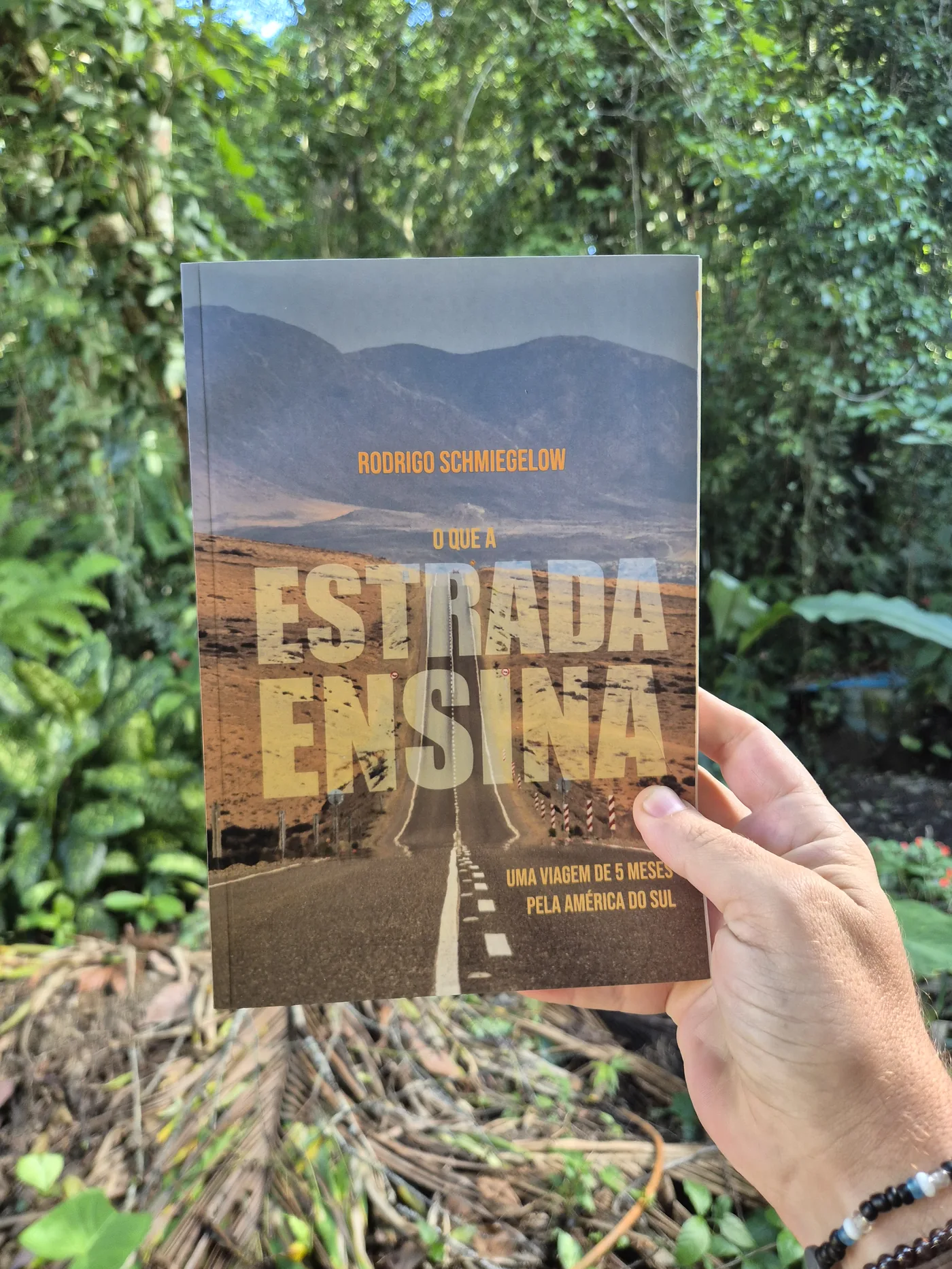
What the Road Has to Teach is the account of that stretch: 147 days deciding the next destination one day before leaving the last one. It is not a route guide. It is what happens between the waypoints, told in short chapters that mix landscapes, breakdowns, mechanics who refuse to charge, strangers who turn into temporary family, and the food of each place.
Rodrigo Schmiegelow left a career that looked good from the outside and was suffocating him, and rode south looking for lightness. The book is honest about that part too: the falls, the fear, the days when fatigue won, and the long stretches where nothing happens except the road.
The English edition is available on Amazon. There are also editions in Portuguese and Spanish.
Questions people ask
Can you ride across South America alone?
Yes, and the southern circuit through Brazil, Uruguay, Argentina and Chile is one of the gentler ways to do it: paved roads, fuel every few hundred kilometres, a shared language across most of it and borders that are used to travellers. Rodrigo Schmiegelow rode it solo for 147 days and more than 20,000 km with a motorcycle and a backpack, planning each leg a day ahead.
What is the best time of year for a South America motorcycle trip?
November to March is the southern hemisphere summer, which keeps the Andes passes open and gives long riding days. The trade-offs are heat in the north, persistent wind in Patagonia, higher prices and full hostels around the holidays. Mountain passes can still close for a day or two after a summer storm.
What documents do you need to cross these borders on a motorcycle?
Passport, the vehicle's ownership papers, a driving licence and the Carta Verde, the Mercosur insurance card required for Uruguay, Argentina and Paraguay. It is arranged before departure. Enforcement varies: on this trip it was never actually requested at the Uruguayan border, but travelling without it is a risk not worth taking.
Which border crossing is the strictest?
Chile. Entering from Argentina meant opening the panniers and partly unpacking, because Chile enforces agricultural controls: fresh produce, seeds and nuts are not allowed in, even salted peanuts. Uruguay was a quick check and Argentina waved the bike through without the rider getting off.
Is the book a route guide?
No. It is a first-person narrative in short chapters, closer to travel literature than to a guidebook. The places are real and named, but the subject is what the trip does to the person riding: freedom, detachment, fear, luck and the people met along the way.
Who is Rodrigo Schmiegelow?
A Brazilian author who left a corporate career, rode solo from southern Brazil to the Atacama and wrote his first book about it. He also runs O Mundo em Lanches, a project about travel, culture and street food.